
Purify Your Water with Water Treatment Solutions
Are you getting the highest-quality water from your home or office? Hard water may be impossible to spot with the naked eye, but the evidence remains long after the water has dried; cloudy and spotty dishes are the telltale signs of water high in mineral content. Worse yet, harmful contaminants in the water supply can negatively impact your health as well as your family’s or your employees’. Commercial and residential water treatment solutions from Puritan Springs can greatly improve the water quality in your home or office, resulting in water that’s cleaner, healthier, and better tasting.
Water Softeners
Designed to treat hard water — i.e., water with high levels of dissolved calcium and magnesium — water softeners use salt to replace minerals in the water with sodium. Essentially, water is filtered through a layer of resin beads that are saturated with sodium. As it passes through, minerals in the water attach to the resin, while the sodium that had been there before enters the water volume; this results in water that is less “hard,” so it leaves less residue in showers and bathtubs or on dishes after drying. After a certain point, the resin layer becomes saturated with the filtered minerals and enters a regeneration cycle, returning it to its previous, sodium-rich state.
Reverse Osmosis System
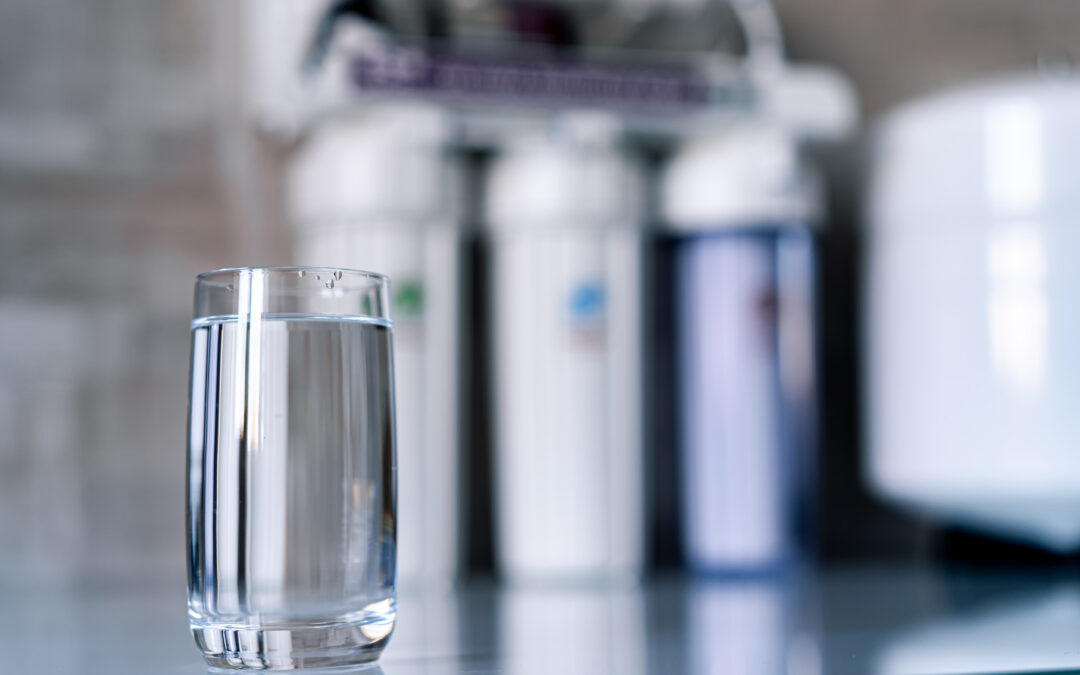
Another type of treatment available from Puritan Springs is a reverse osmosis system. This solution passes water through a semi-permeable membrane designed to remove contaminants that can’t be removed by water softeners; these can include lead, volatile organic compounds (VOCs), PFAS, arsenic, bacteria, and viruses. Reverse osmosis systems are point-of-use, which means they’re installed at one specific point in the house, like a kitchen sink.
Which Treatment Option Should I Choose?
Thankfully, water softeners and reverse osmosis systems are not mutually exclusive; both can be installed in your home or office. However, one should not be a substitute for the other. While a water softener is ideal for using large amounts of water — such as showers, dishwashers, and washing machines — reverse osmosis systems are better suited for small amounts of water from a single source (i.e., drinking water). Property owners may install a water softener without a reverse osmosis system. On the flip side, reverse osmosis systems do not remove mineral content from water before filtering out contaminants and can become clogged with calcium without a water softener.
Find the water treatment solution that best suits your needs — we’re here to help! Contact us today or call 1-800-292-2992 for more information.